

In modern industrial manufacturing and precision production, dispensing technology permeates critical stages of various products like a “microscopic circulatory system.” The core component driving this technology—the dispensing pump—directly determines the precision, efficiency, and reliability of the dispensing process. Understanding how dispensing pumps work and gaining insight into their wide-ranging application scenarios is crucial for optimizing production workflows and enhancing product quality.
I. Precision Drive: The Core Working Principles of Dispensing Pumps
At its essence, a dispensing pump is a precision fluid transfer and control device. Its core function is to apply a specific, controlled amount of adhesive, sealant, lubricant, or other fluid precisely onto a target location. Based on their technological principles, mainstream dispensing pumps are primarily categorized into the following types:
1. Time-Pressure Type: A traditional and widely used method. Its principle involves controlling the dispensed volume by regulating compressed air pressure and its application time. Compressed air enters the pump body, driving a piston or diaphragm to push fluid out from the reservoir. The dispensed volume is proportional to the pressure magnitude and the valve-open time. This system is relatively simple in structure but is sensitive to fluid viscosity, temperature, and pressure stability, presenting limitations in ultra-high-precision applications.
2. Progressive Cavity Pump Type: Utilizes a precision rotating screw within a stator cavity to form stable sealed chambers, uniformly and continuously conveying fluid from the inlet to the outlet. This pump type is exceptionally well-suited for handling medium-to-high viscosity fluids containing fillers. It offers minimal output pulsation and precise metering. There is a linear relationship between the screw speed and the dispensed volume, enabling extremely high repeatability through servo-motor-controlled speed regulation.
3. Piston Pump Type: Employs a precision-machined piston performing reciprocating motion within a cylinder to achieve fluid intake and discharge. The fluid volume discharged per stroke is fixed. Therefore, by counting and controlling the number of piston strokes, exceptionally precise quantitative dispensing is achieved. Piston pumps adapt well to fluids of various viscosities and are particularly adept at meeting micro-volume, ultra-high-precision dispensing requirements, such as chip underfill.
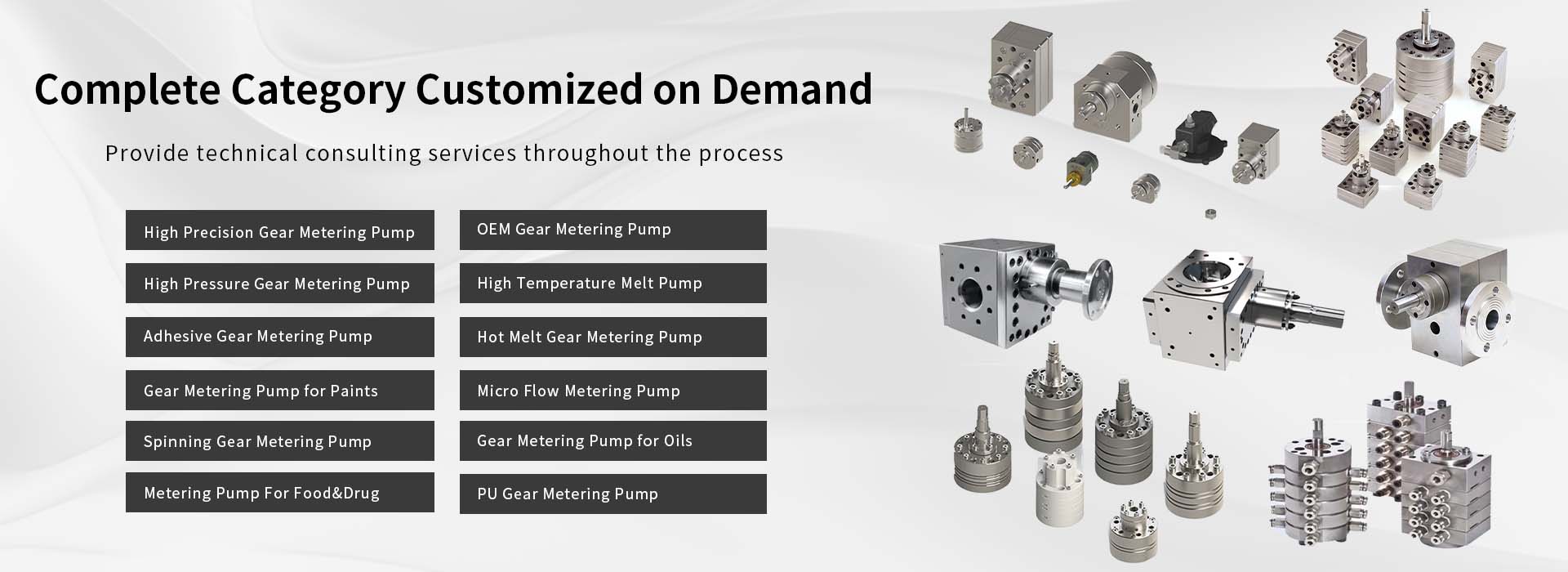
4. Gear Pump Type: Operates via two precision-meshing gears rotating within the pump cavity. Enclosed spaces formed between the gear teeth and the pump housing carry fluid from the inlet side to the outlet side. It provides stable, pulsation-free flow, making it suitable for applications demanding high coating continuity, such as surface coating or sealing.
Regardless of type, modern high-end dispensing pumps often integrate precision sensors, servo drive systems, and intelligent controllers. These systems enable real-time monitoring and compensation for parameters like pressure, flow, and temperature, ensuring consistent and accurate dispensing even during high-speed motion.
II. Ubiquitous Presence: The Diverse Application Scenarios of Dispensing Pumps
Thanks to their precise, controllable fluid dispensing capabilities, dispensing pumps have become indispensable “dexterous hands” in advanced manufacturing, with applications spanning multiple high-tech sectors.
l In Consumer Electronics and Semiconductor Packaging, this is the main stage where dispensing pumps demonstrate their “micro-engraving” artistry. From smartphones and tablets to wearable devices, dispensing pumps are responsible for critical processes like chip packaging (underfill, encapsulants), PCB coating (conformal coating), display lamination (OCA, LOCA), speaker/microphone sealing, and structural component bonding. The position and volume of every droplet of adhesive are crucial, directly impacting product performance, ingress protection (IP) ratings, and long-term reliability. The underfill of a single tiny chip often requires tens or even hundreds of thousands of ultra-precise dispensing actions, posing stringent challenges to the dispensing pump’s longevity, stability, and precision.
l In the Automotive Industry and New Energy Sector, dispensing pumps undertake tasks of reinforcement, sealing, and electrical conduction. They are used for automotive lamp encapsulation (ensuring airtightness and weather resistance), sensor potting, ECU circuit board coating, and bonding/sealing for Battery Management Systems (BMS). Particularly in the manufacturing of new energy vehicle battery packs, dispensing pumps are employed for structural bonding between cells and modules, precise application of thermal interface materials, and battery enclosure sealing—all directly related to the safety, thermal management efficiency, and lifespan of the battery pack.
l In Medical Devices and Bioengineering, hygiene and precision are paramount. Dispensing pumps are used for precise reagent dispensing in disposable diagnostic devices (e.g., blood glucose test strips), adhesive bonding and sealing for medical catheters and sensors, fabrication of microfluidic chips, and assembly of implantable medical devices. Their clean material compatibility, contamination-free operation, and microliter or even nanoliter dispensing capabilities provide reliable technical support in the life sciences and healthcare fields.
l In Lighting and Energy, LED packaging is a classic application for dispensing pumps. They precisely dispense phosphor gel onto LED chips, directly determining the light source’s color temperature, efficacy, and consistency. Similarly, in photovoltaic solar panel production, dispensing pumps are used for potting and protecting junction boxes, ensuring their long-term stable operation in harsh outdoor environments.
Furthermore, dispensing pumps are also ubiquitous in industries such as aerospace, precision instruments, home appliance manufacturing, and even food packaging, performing diverse tasks including bonding, sealing, coating, lubrication, and potting.
Conclusion
From micron-scale chips to meter-long automotive bodies, from precise biological reagents to high-viscosity structural adhesives, dispensing pumps, with their diverse working principles and superior fluid control performance, perfectly align with modern industry’s dual pursuit of “quality” and “efficiency.” As smart manufacturing and Industry 4.0 advance, dispensing pumps are evolving towards greater intelligence, integration, and connectivity. They are deeply integrating with machine vision, motion control, and the Internet of Things (IoT), becoming intelligent nodes on flexible production lines. Choosing a suitable dispensing pump is not merely selecting a tool; it is laying a solid foundation for product quality, production efficiency, and process innovation.
Your email address cannot be published. Required fields are marked*
No comments