

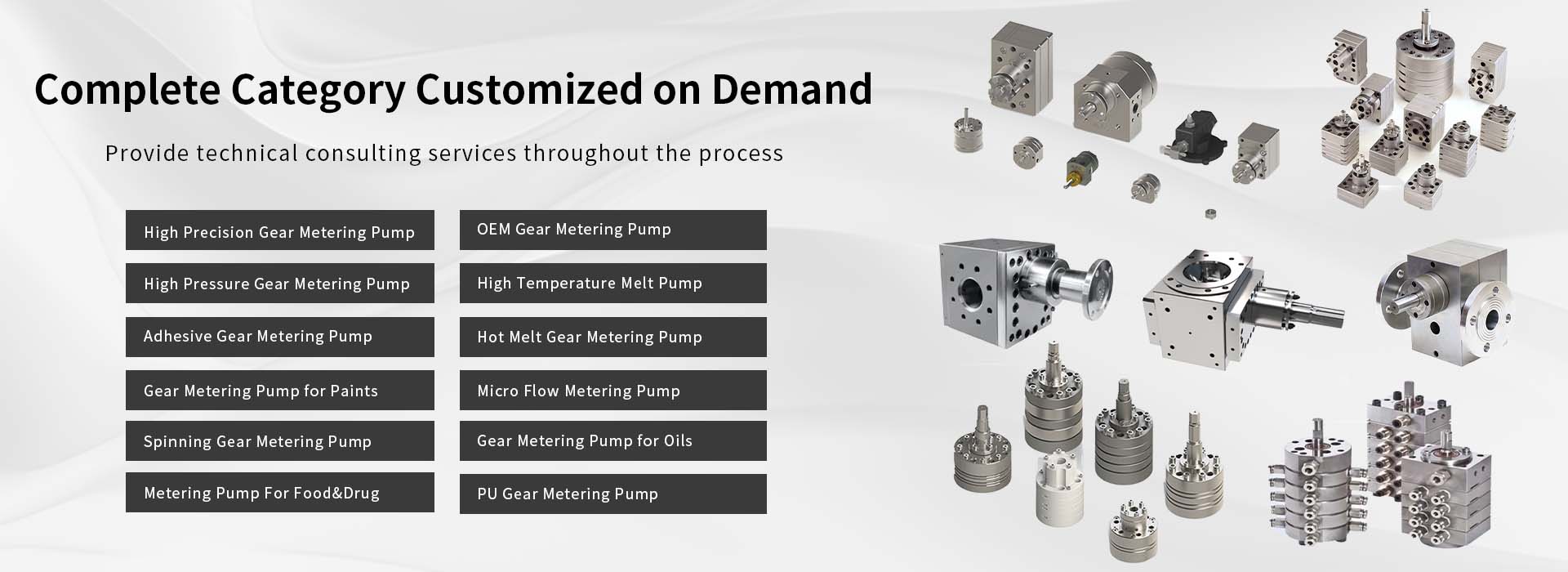
External gear metering pumps are precision fluid equipment that integrates the functions of fixed-quantity delivery and accurate metering. Boasting the advantages of constant displacement, compact structure and strong adaptability, they are widely used in industries with strict requirements for fluid delivery accuracy such as chemical engineering, pharmaceuticals, food, and petroleum. Their core working principle relies on the positive-displacement movement of gear meshing to achieve fixed-quantity delivery, and the metering accuracy directly determines the stability of production processes and the qualification rate of products. However, due to their sophisticated internal structure and the minimal fit clearance between gears and the pump body, there are explicit requirements for working condition adaptation and operation procedures. If key details are overlooked, problems such as excessive metering errors, accelerated equipment wear, and seal failure are likely to occur, which will seriously affect the production schedule. Therefore, mastering the standardized usage precautions and implementing full-process operation control are the core to ensuring the efficient, stable and long-term operation of the equipment. Type selection and adaptation are the prerequisites. It is necessary to accurately match the working conditions and process requirements to avoid inherent hidden dangers. Three core dimensions should be focused on during type selection: first, medium characteristic adaptation. Select the corresponding pump body material and seal type according to the viscosity, corrosiveness, solid content and temperature of the conveyed medium—for example, stainless steel pump bodies are used for corrosive media, large-module gears are matched for high-viscosity media, and special filters need to be equipped in advance for media containing a small amount of impurities; second, precise parameter matching. Clarify the metering accuracy, flow range and working pressure required by the process to ensure that the rated parameters of the pump are consistent with the process requirements. Overload operation is strictly prohibited to prevent metering deviations caused by excessive pressure or mismatched flow; third, environmental adaptation. High-temperature or low-temperature resistant seals and lubricating oil are selected for high or low-temperature working conditions. Protective enclosures should be installed for outdoor or dusty environments to avoid damage to the precision components of the equipment caused by environmental factors. Standardized installation is the foundation, which directly affects the metering accuracy and operational stability. Three common mistakes need to be avoided. First, select a reasonable installation location. Priority should be given to areas close to the medium storage tank and away from vibration sources. The pump body must be installed horizontally; tilting is strictly prohibited to prevent uneven gear meshing and insufficient oil suction that may lead to cavitation. Second, ensure standardized pipeline connection. Use pipes with appropriate diameters for the oil suction and discharge pipelines, minimize the length of the suction pipeline and reduce the number of elbows to lower pipeline resistance. At the same time, ensure good pipeline sealing to eliminate air and oil leakage, which could otherwise affect metering accuracy. Third, ensure correct electrical connection. Confirm that the motor rotation direction is consistent with the mark on the pump body; reverse rotation is strictly prohibited to prevent gear wear and shaft system damage. In addition, equip with overload and overheating protection devices to prevent motor faults from affecting the pump body. Scientific operation is the core, which requires real-time monitoring and standardized operation. Before operation, conduct a no-load test run for 5-10 minutes to check for abnormal noise or leakage of the pump body, smoothness of gear meshing, and normal lubricating oil level. Only after confirming everything is normal should the medium be introduced. During operation, monitor the flow rate, pressure and motor current in real time. If flow fluctuations, abnormal pressure, abnormal noise or rapid temperature rise occur, stop the machine immediately for troubleshooting to avoid expanding the fault. Meanwhile, strictly control the cleanliness of the medium, clean the filter regularly to prevent impurities from entering the pump body, which would accelerate the wear of gears and pump body bores and lead to a decline in metering accuracy. In addition, avoid frequent start-stop of the equipment; adjust the valves slowly during start-up and shutdown to reduce the damage to the pump body caused by pressure shocks. Daily maintenance is the key to effectively extending the service life of the equipment, which should follow the principles of "regular inspection, timely replacement and standardized maintenance". During daily operation, check the pump body temperature, seal condition and lubricating oil level every day, replenish or replace the standard-compliant lubricating oil in a timely manner to ensure sufficient lubrication for gear meshing. Clean the scale and impurities in the pump cavity and on the gear surface every week, and check the wear condition of wearing parts. Conduct a comprehensive inspection of wearing parts (gears, seals, bearings, etc.) every month according to the operating hours, and replace those that are aged or severely worn in a timely manner. During maintenance, follow standardized disassembly procedures to avoid damaging precision parts due to violent disassembly. After maintenance, conduct a no-load test run and metering calibration, and put the equipment into use only after it passes the test. In summary, the use of external gear metering pumps requires full-process control covering "type selection, installation, operation and maintenance". The detailed control of each link directly affects the equipment performance and metering accuracy. Only by strictly following the above precautions, standardizing the operation process and troubleshooting hidden dangers in a timely manner can we give full play to the advantages of fixed-quantity delivery and accurate metering, ensure the stability of the production process, extend the service life of the equipment, and reduce production costs and failure rates.
Your email address cannot be published. Required fields are marked*
No comments